
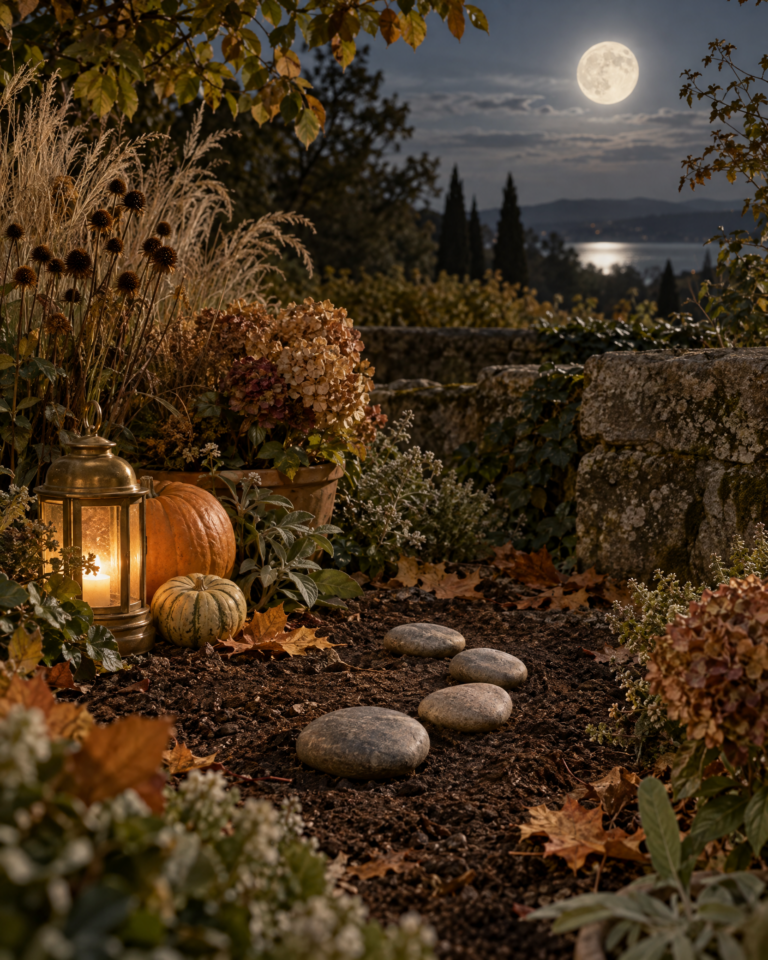

The September Harvest Moon reached fullness on September 26, just after the equinox. The Moon is now beginning to wane, but the seasonal question still feels useful: what have you learned, and what will you do with that knowledge?
Tarot can help you explore that question without turning the cards into a fixed prediction. A thoughtful reading is a conversation with your attention. The images help you notice patterns, name feelings, and choose a practical next step.
Start with a clear question
Good tarot questions are open enough to invite reflection and focused enough to be useful. Instead of asking, “Will everything work out?” try, “What can I understand about the situation?” or “What would help me respond with more care?”
Avoid questions that hand your choices over to the cards. Tarot cannot replace medical, legal, financial, or mental-health advice. It can offer a creative way to pause before you decide.
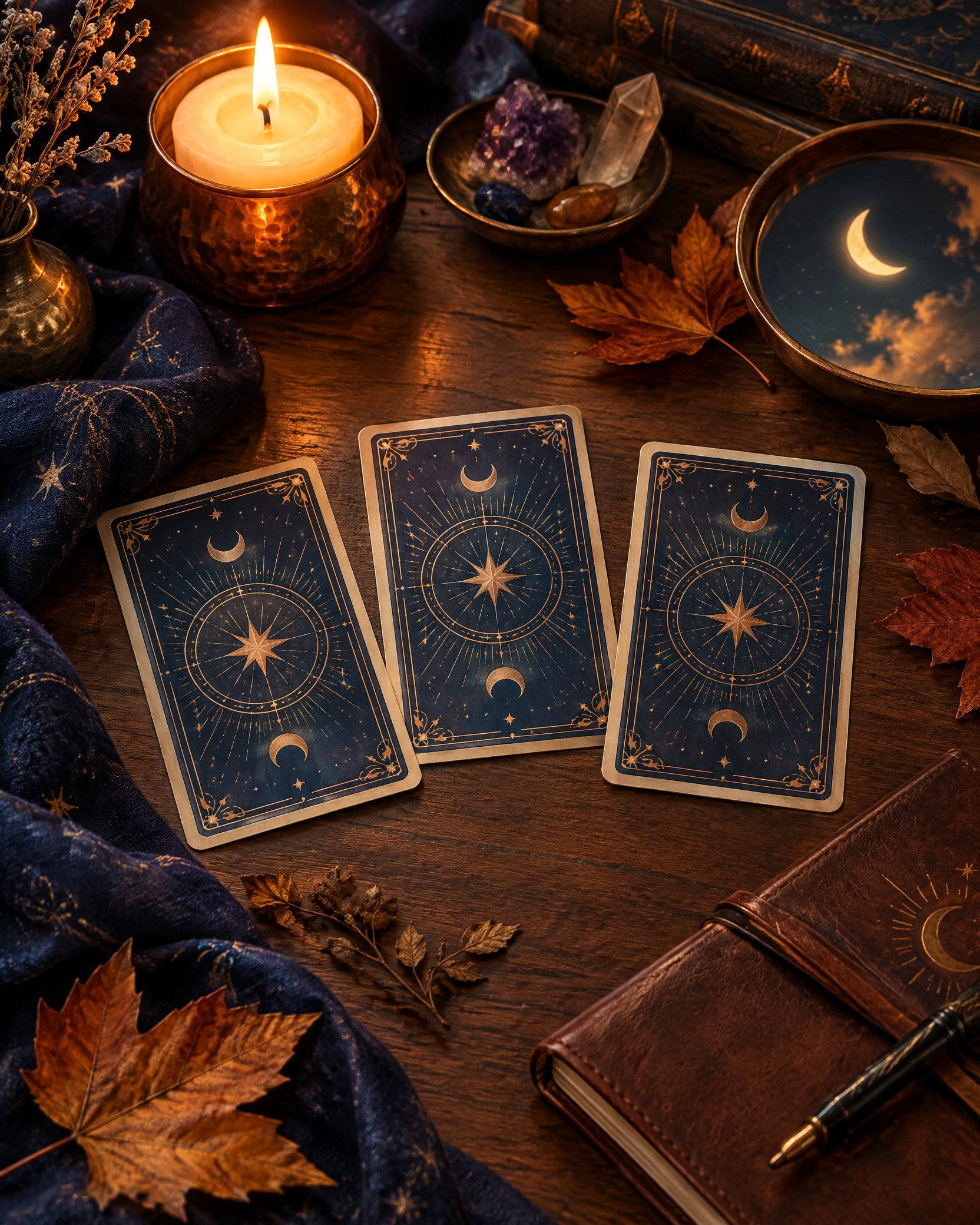
Try a simple three-card spread
Card one: What have I gathered?
This card represents a lesson, skill, relationship, or piece of information you have gained. Look for something real. It does not need to be dramatic. A stronger boundary or a clearer sense of what you want counts as progress.
Card two: What needs sorting?
This card points to mixed feelings, unfinished work, or an assumption that may need a closer look. Do not treat a difficult card as a threat. Ask what it is helping you see.
Card three: What is my next useful step?
This card should lead to an action you can take. Keep it small enough to complete. A reading becomes more meaningful when it changes how you move through an ordinary day.
How to read the cards without overreacting
First, describe what you actually see. Notice the colors, posture, direction, weather, symbols, and mood. Then connect the image to your question. Finally, check the story against your real life.
A card can suggest a theme without proving a fact. The Five of Cups may invite you to notice grief, but it does not mean something terrible is guaranteed. The Tower may point to a sudden change in a story, but it is not a reason to panic. Context matters.
Use a journal to separate insight from impulse
Before searching for a card’s traditional meaning, write three sentences about your first response. What did you notice? What feeling came up? What part of the image felt familiar?
Then read a trusted guidebook or reference and compare the traditional meaning with your own reaction. This helps you learn the language of tarot while keeping your reading personal and grounded.
A seasonal reflection after the Harvest Moon
The Harvest Moon is traditionally connected with gathering and preparation. Use that idea as a gentle prompt:
- What is worth bringing into the next season?
- What no longer deserves so much of my attention?
- What one habit would make my days easier?
You do not need a special ritual or expensive tools. A deck, a notebook, and ten quiet minutes are enough. If you do not own a deck, choose three images from a magazine or use three words that describe your current situation.
Let the reading return you to your own wisdom
The best tarot reading does not make you feel powerless. It helps you become more honest about what you already know, what you still need to learn, and what choice is available now.
Let the cards open the conversation. Then close the notebook, take one grounded action, and allow your experience—not a prediction—to guide what comes next.
Source: The Planetary Society: What’s up in the night sky: September 2026.

Kyle the Oracle is the founder of Another Mystic Monday — an astrology and spiritual wellness blog. With over a decade of study in Western astrology, Vedic astrology, and tarot, Kyle brings warmth, depth, and a touch of magic to every post.