



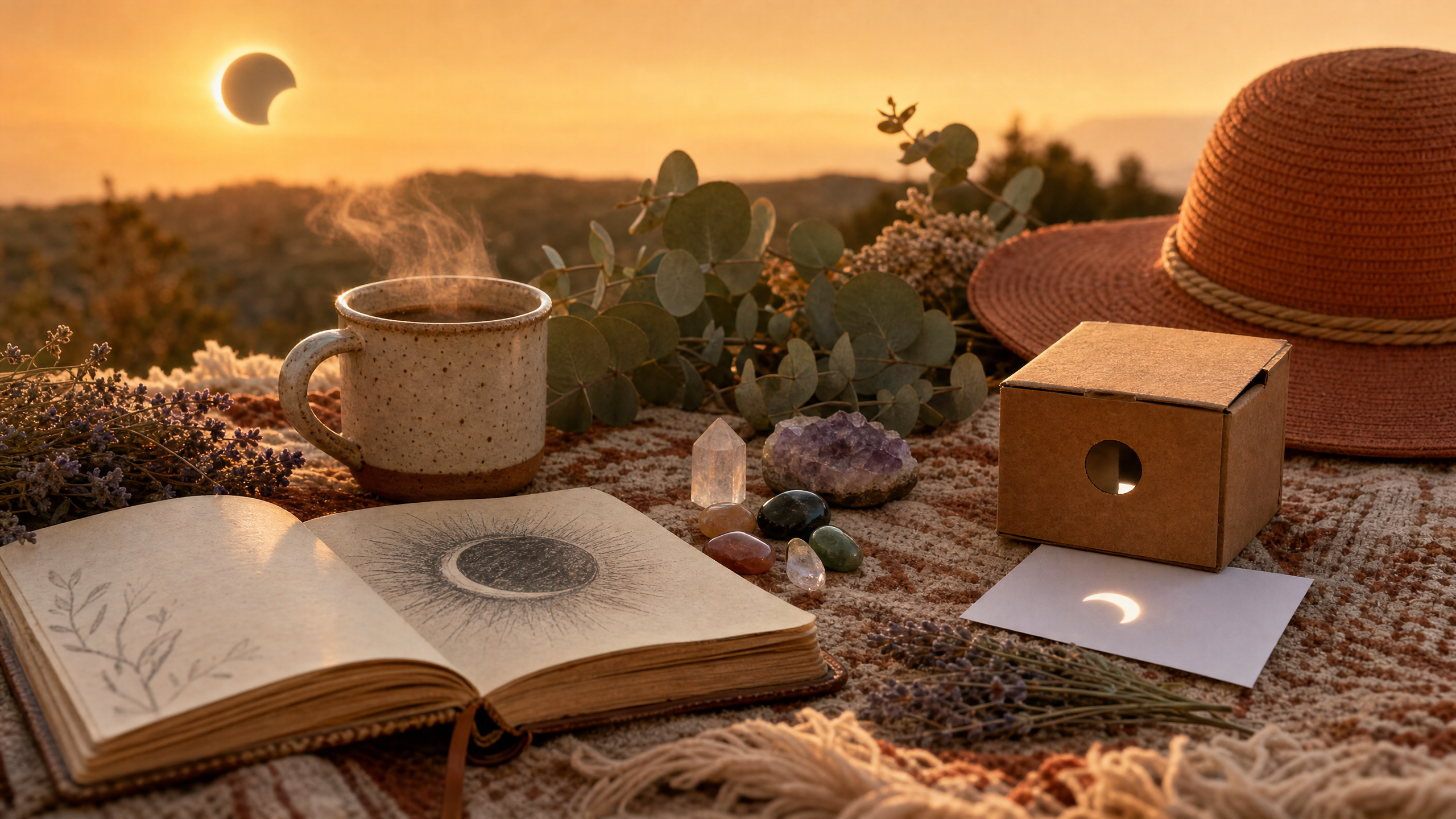
There’s something viscerally electric about a solar eclipse — day folded briefly into a silver hush, birds pausing mid-song, a hush that feels like the sky taking a breath. On August 12, 2026, a total solar eclipse will trace a narrow path across parts of the northern hemisphere. Whether you’re lucky enough to be standing within that ribbon of totality or you’ll only see a thin crescent of shadow far from the centerline, this celestial event invites thoughtful observation, safe practices, and inward reflection.
What’s happening on August 12, 2026?
On August 12, 2026, the Moon will pass directly between the Earth and the Sun, creating a total solar eclipse visible along a specific path of totality. This path crosses Greenland, Iceland, northern Russia, the Atlantic Ocean, Spain, and a small corner of Portugal. Observers within that narrow path will experience the dramatic moment of totality — daytime briefly dimming to twilight, the Sun’s corona shimmering around the dark disk of the Moon.
Observers in the northern contiguous United States and southern Canada will not be in the path of totality; they will see only a small partial eclipse. Direct viewing is safe only during the brief totality for people within the path of totality. Every partial phase requires ISO 12312-2 eclipse glasses or an equivalent safe solar viewer; regular sunglasses are unsafe. Eclipse glasses must never be used with camera lenses, telescopes, binoculars, or other optics unless the optical device has a purpose-built solar filter fitted at its front.
Why this eclipse feels astrologically potent (symbolically)
Astrology loves symbolism, and the solar eclipse is a strong archetype: the Sun (our conscious self and vitality) momentarily disappears, inviting a pause, a recalibration. Rather than promising horoscope-style predictions, think of the eclipse as a theatrical sky metaphor for endings, beginnings, and reorientation. It’s a dramatic reminder that even the luminous center can be eclipsed, and that new sightlines open in the resulting shadow.
For folks who work with natal charts or cyclical astrology, an eclipse can act as an accelerant for inner questions you’ve already been sitting with. If you’re curious about how eclipses interact with your personal chart, consider revisiting your natal placements — and if you’re newer to chart work, check out Birth Chart 101: What It Is and How to Read It to ground yourself in the basics before layering eclipse symbolism.
How to witness the eclipse safely
Safety is the first form of reverence we owe the sky. The Sun’s visible light and invisible radiation can harm your eyes in seconds if you’re not careful. Follow these non-negotiable safety points:
- Direct viewing is safe only during the brief totality for people within the path of totality. Outside that brief interval, never look at the Sun without proper protection.
- Every partial phase requires ISO 12312-2 eclipse glasses or an equivalent safe solar viewer. These are inexpensive and widely available; buy them from reputable sources and inspect them for scratches before use.
- Regular sunglasses are unsafe. Even very dark sunglasses do not block harmful solar radiation.
- Eclipse glasses must never be used with camera lenses, telescopes, binoculars, or other optics unless the optical device has a purpose-built solar filter fitted at its front. Using eclipse glasses with an optical device magnifies sunlight and can cause immediate eye injury.
- Projecting the Sun’s image (pinhole projectors, solar projection boxes) is a safe, old-school, and delightful way to “see” the eclipse without looking at the Sun itself.
If you plan to travel to the path of totality, check local resources for viewing events and safety briefings. Local astronomy clubs, science centers, and municipalities often host professionally guided experiences that include safe equipment and clear instructions. If you’re outside the path, don’t pretend you saw totality — instead, learn how to experience the partial phases meaningfully and safely.
For those outside the path: meaningful participation
Not being in the centerline doesn’t mean you can’t be moved by the eclipse. Partial eclipses still change daylight quality and cast unusual shadows. Here are grounded ways to participate from anywhere:
- Observe shadow play: Look at the ground beneath trees. The tiny crescent-shaped patches of light filtering through leaves are one of the most poetic signs of a partial eclipse.
- Use projection methods: Make a pinhole projector with a piece of cardboard, or use binoculars to project the Sun onto a white surface (but never look through the binoculars at the Sun).
- Attend an organized watch party or stream: Live streams from inside the path of totality can be remarkably moving. Treat them like a ritual — dim lights, sit quietly with a notebook, and witness together across distance.
- Practice a witness ritual: Set an intention for what you want to release or begin, then fold that intention into a simple practice (journaling, a small burning ceremony with safety, or mindful breathwork) timed before and after the greatest eclipse magnitude you’ll see locally.
Honest participation—seeing the partial shadow for what it is—creates a deep, grounded relationship to the event rather than a FOMO-driven need to imagine totality from afar.
Reflective practices to do before and after the eclipse
Think of the eclipse as a hinge: one foot in what’s been, the other stepping into what’s possible. These are not magic spells guaranteeing outcomes, but simple, evocative practices to help you notice internal shifts.
- Three-part journaling (before the eclipse): 1) What’s ending? Write one short line about a habit, pattern, or relationship you’re ready to release. 2) What’s remaining? Note one resource or value you want to keep. 3) What’s emerging? Name one small possibility you can try after the eclipse.
- Quiet witness (during the eclipse phases you can see): If you’re in a position to safely use eclipse glasses, take a minute of silent observation, then remove glasses and close your eyes to sense how your body responded.
- Integration ritual (after the eclipse): Plant a seed, literally or metaphorically. Write the action you’ll take on a biodegradable paper and tuck it into soil, or place a small token in a pouch you’ll check monthly.
- Share your account: Tell someone what you noticed — a friend, a partner, or a community forum. Sharing makes the experience social and embeds it in memory.
Practical Application: a simple, 10–20 minute eclipse practice
This mini-practice is portable and gentle — for people inside and outside the path of totality. It’s designed to be done in three stages: Preparation, Witnessing, and Integration.
- Preparation (5 minutes): Sit in a comfortable outdoor spot where you can safely observe the sky. If you have ISO 12312-2 glasses and are in a region where only partial phases occur, put them on when you look. Take five slow breaths and name aloud one thing you will release and one tiny action you commit to trying after the event.
- Witnessing (5–10 minutes): Observe the sky, the quality of light, and the shadows. If you’re watching a livestream from the path of totality, treat it as your visual anchor. Breathe with the rhythm of the moment — slow inhale for 4, hold 2, exhale 6 — and notice sensations in your body.
- Integration (5 minutes): Close your eyes. Visualize placing what you want to release into a small pouch and sealing it. Then, visualize placing your next small action into a second pouch you’ll check each week. Open your eyes and write one sentence committing to the first step you’ll take in the next 48 hours.
This practice honors the eclipse as a container for intention without promising cosmic guarantees. It’s about creating inner clarity and small, practical movement forward.
Frequently Asked Questions
Q: Can I watch the eclipse with regular sunglasses?
A: No. Regular sunglasses do not protect your eyes from harmful solar radiation. You need ISO 12312-2 eclipse glasses or an equivalent safe solar viewer for every partial phase. Direct viewing is safe only during the brief totality for people within the path of totality.
Q: I live in the northern U.S. — what will I see?
A: Observers in the northern contiguous United States and southern Canada will see only a small partial eclipse. You’ll notice a bite taken out of the Sun and an altered light quality, but you will not experience totality unless you travel into the path that crosses Greenland, Iceland, northern Russia, the Atlantic Ocean, Spain, and a small corner of Portugal.
Q: Is it okay to photograph the eclipse with my phone or camera?
A: Photographing the partial Sun without a proper solar filter is dangerous for your eyes and can damage your camera. Never look through an unfiltered camera, binoculars, or telescope at the Sun. If you plan to photograph, use a dedicated solar filter mounted on the front of the lens and practice beforehand with guidance from trusted sources.
Q: I can’t travel to the path of totality. Is watching a live stream worthwhile?
A: Absolutely. A high-quality live stream from observers inside the path can be moving and educational. Treat it as a shared witness: dim your lights, sit quietly, and use your own journaling or breath practice to mark the event. Realize the difference between watching and being in totality, and honor your own limits honestly.
Conclusion: Hold the sky with both feet on the ground
The August 12, 2026 total solar eclipse is a rare, humbling sky event. It’s an invitation to look up safely, to notice how light and shadow reshape our perception, and to practice a gentle form of inner housekeeping. Whether you travel to stand in the narrow ribbon of totality or you watch the changing shadows from a backyard in a place that only sees a partial eclipse, the most meaningful experiences come from preparation, safety, and honest reflection.
If the eclipse stirs questions about your natal chart or how cosmic cycles might feel personally, we have clear resources to help you learn the basics before layering interpretive meanings — start with Birth Chart 101: What It Is and How to Read It. And for quick answers about eclipse mechanics or common astrology questions, check our Astrology Q&A: Answers to Your Most Common Cosmic Questions.
Most of the magic here is not in expecting grand cosmic decrees, but in carving out a small, intentional, well-prepared moment to witness something larger than ourselves. Keep your curiosity bright, your safety gear ready, and your inner field clear enough to notice whatever subtle changes follow.
Disclaimer: The content on Another Mystic Monday is intended for entertainment and inspirational purposes only. Astrology, tarot, and spiritual practices discussed here are not a substitute for professional medical, psychological, financial, or legal advice. Always consult a qualified professional for matters affecting your health, finances, or wellbeing.

Kyle the Oracle is the founder of Another Mystic Monday — an astrology and spiritual wellness blog. With over a decade of study in Western astrology, Vedic astrology, and tarot, Kyle brings warmth, depth, and a touch of magic to every post.